The basic principles of the Caro-Kann Defense are :
Black challenges the center immediately, as in the French Defense, but without blocking their light-squared bishop.
Objective: to obtain a solid yet flexible structure.
Strengths
Very solid: Black’s structure is robust and hard to break through.
The light-squared bishop (unlike in the French Defense) can be developed before …e6.
Endgames are often favorable for Black thanks to a healthy structure.
A good weapon against aggressive players, as it disrupts the rhythm of fast, sharp attacks against 1.e4.
Weaknesses
Black is sometimes a bit passive: fewer opportunities for immediate attacks compared to the Sicilian or the French Defense.
White often obtains a lasting space advantage.
Black must play precisely to activate their pieces, otherwise they risk getting squeezed.
The Advance variation
push !
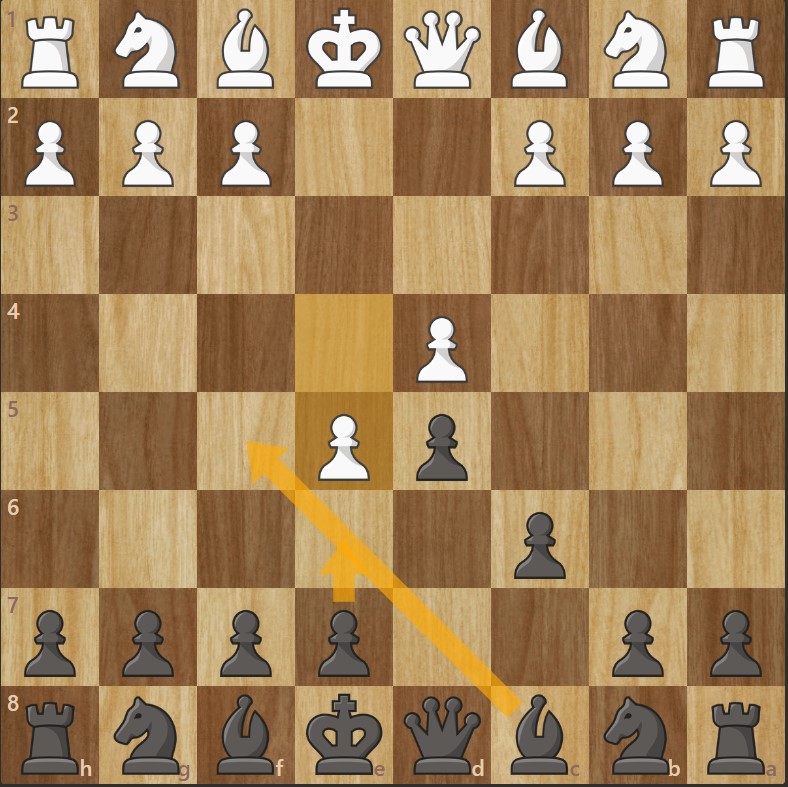
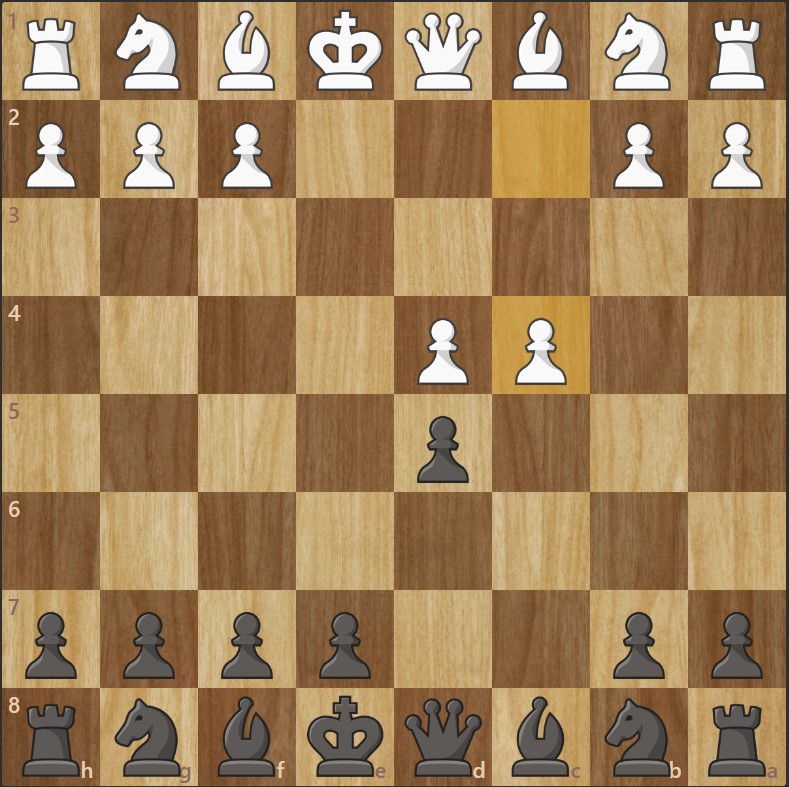
1. e4 c6
2. d4 d5
3. e5
White advances the e-pawn, gaining space in the center and on the kingside.
This structure is very similar to the French Defense Advance (1.e4 e6 2.d4 d5 3.e5), but with one important difference:
In the Caro-Kann, Black’s light-squared bishop is not trapped behind …e6 → it can be developed actively.
The idea for Black is therefore to activate this bishop first and then play …e6, achieving a solid pawn structure in the center.
The white trap
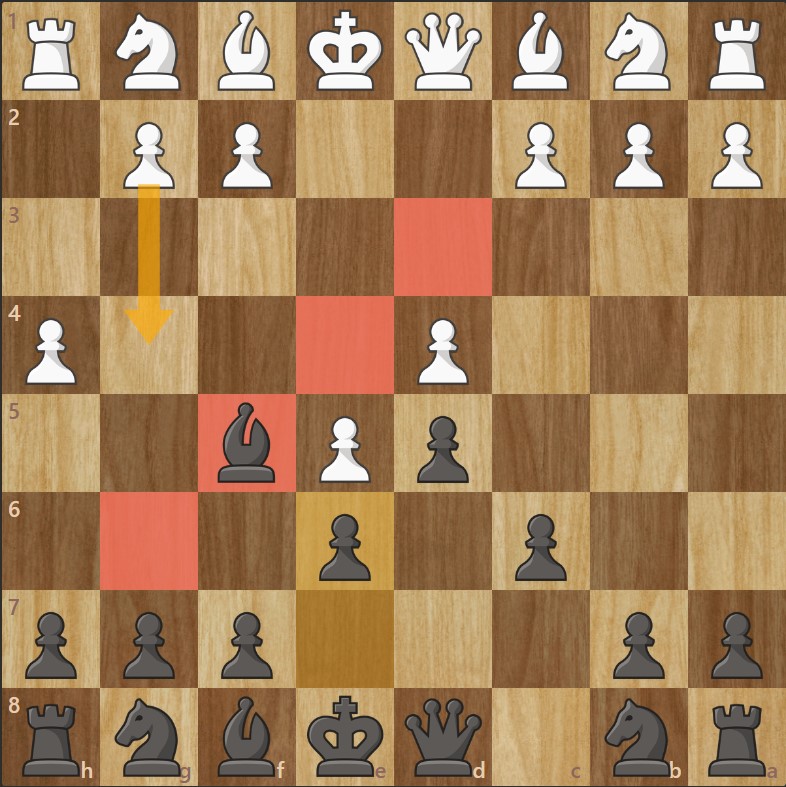
3. e5 Bf5
A classical move : the bishop comes out before …e6 so it doesn’t get trapped.
Black aims for healthy development and a solid structure.
4. h4
White chooses an aggressive plan.
Idea: push h5 to chase the bishop on f5, and if …h6, play g4 to trap it. This line is known as the Bayonet Attack (or Short System).
4… e6
MISTAKE by Black : This traps their own bishop. After White pushes g4, the black bishop is doomed. Black must avoid falling into this trap.
Black should play 4… h5 instead.
A common line
4. Nc3 e6
Nc3 develops a piece and supports d5.
Black plays solidly and prepares …c5.
5. g4 Bg6
White immediately chases the bishop.
Black retreats, but keeps the bishop active on the diagonal.
6. Nge2
White develops the knight via e2 (and not f3).
The idea is to avoid going after the bishop on g6 in a way that would create chaos in Black’s kingside pawn structure.
Black’s bait
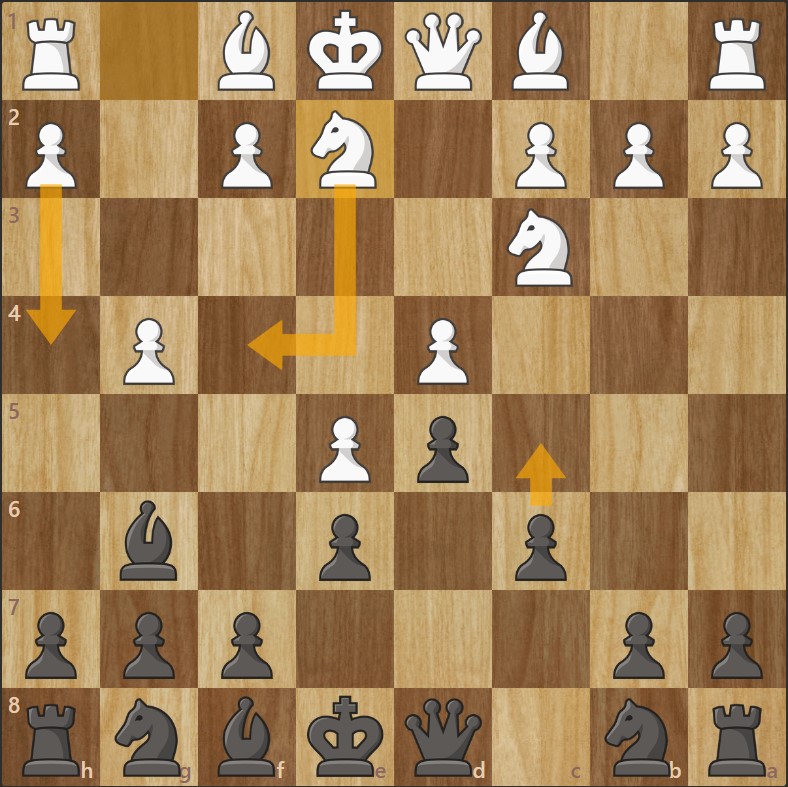
6. Nge2 c5
A thematic reaction from Black: they immediately counterattack in the center.
7. h4 h5
White continues with their aggressive kingside idea.
Black blocks the h-pawn push, trying to neutralize the pawn storm.
8. Nf4 Bh7
The knight redeploys actively, attacking g6.
The black bishop retreats to h7, safely, while still keeping an eye on the diagonal.
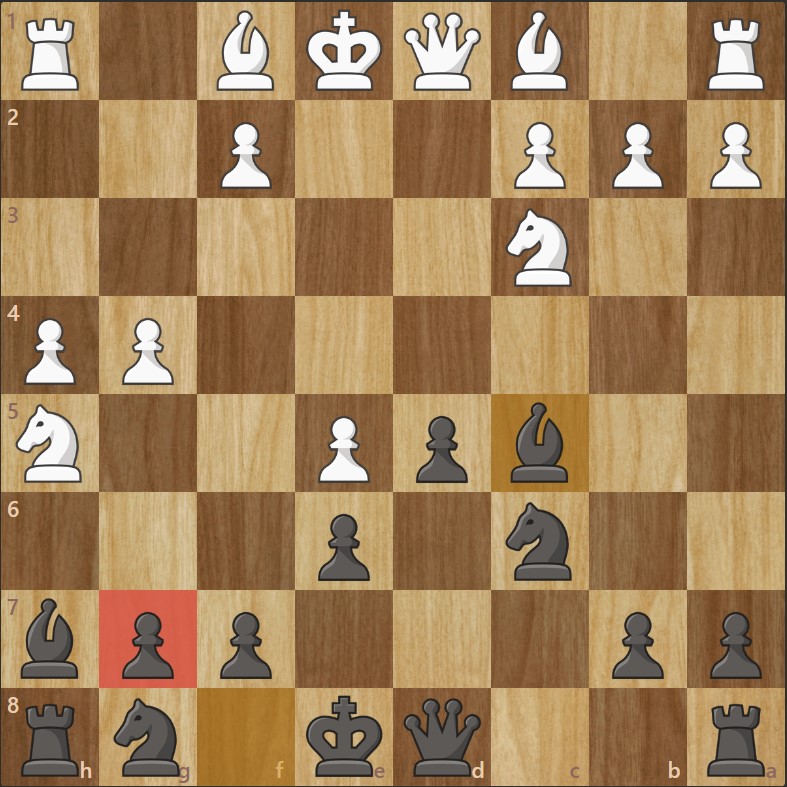
9. Nxh5 Nc6
A direct sacrifice: White captures the pawn on h5.
In return, Black gains time with …Nc6, putting pressure on d4 and e5.
10. dxc5 Bxc5
White captures in the center, opening the diagonal for the c1 bishop.
Black recaptures with the bishop, which becomes very active on the a7–g1 diagonal.
Greed punished
11. Bb5 Qc7
White develops their bishop actively, attacking the knight on c6.
Black responds with Qc7, defending the knight and adding pressure on e5.
12. Bxc6+ Qxc6
White exchanges their bishop for the knight, simplifying the tension.
Black recaptures with the queen, now centralized and very active.
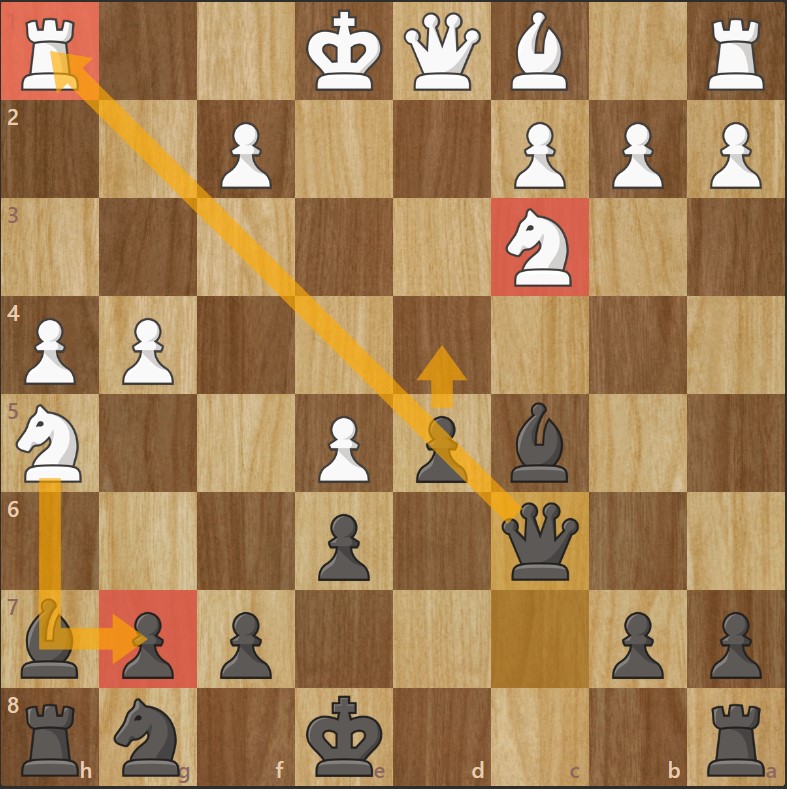
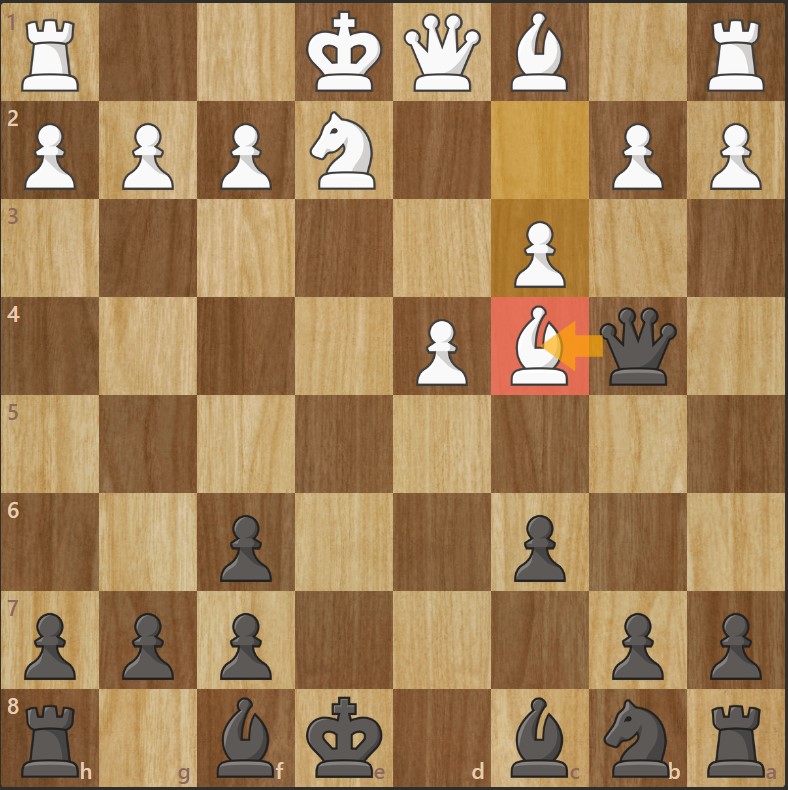
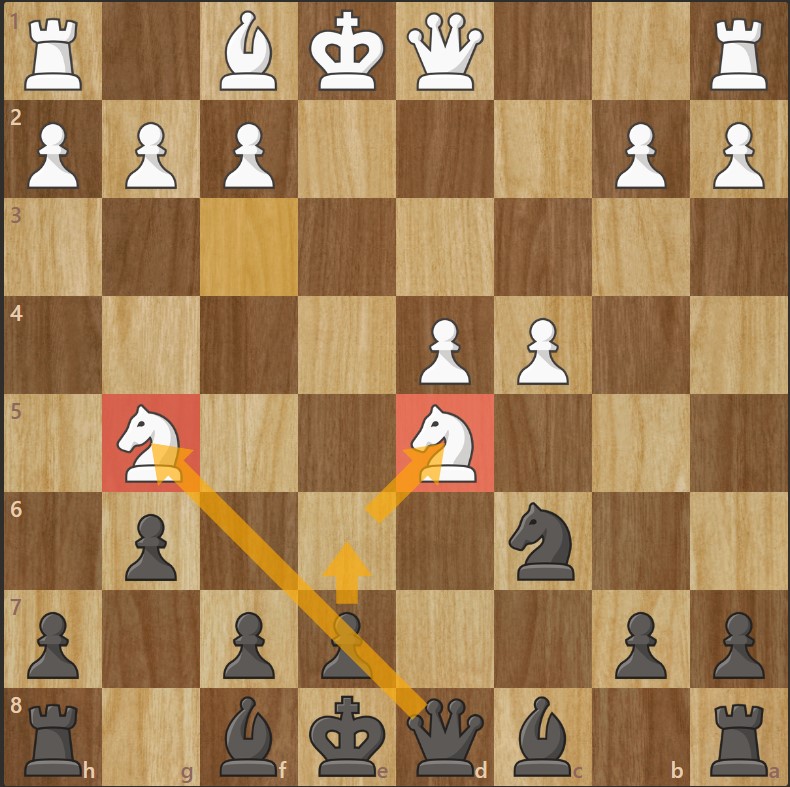
WARNING: If White chooses to capture the pawn on g7 (Nxg7), exposing the black king, Black simply replies Kf8, parrying the check and attacking the knight, which must retreat.
The conversion
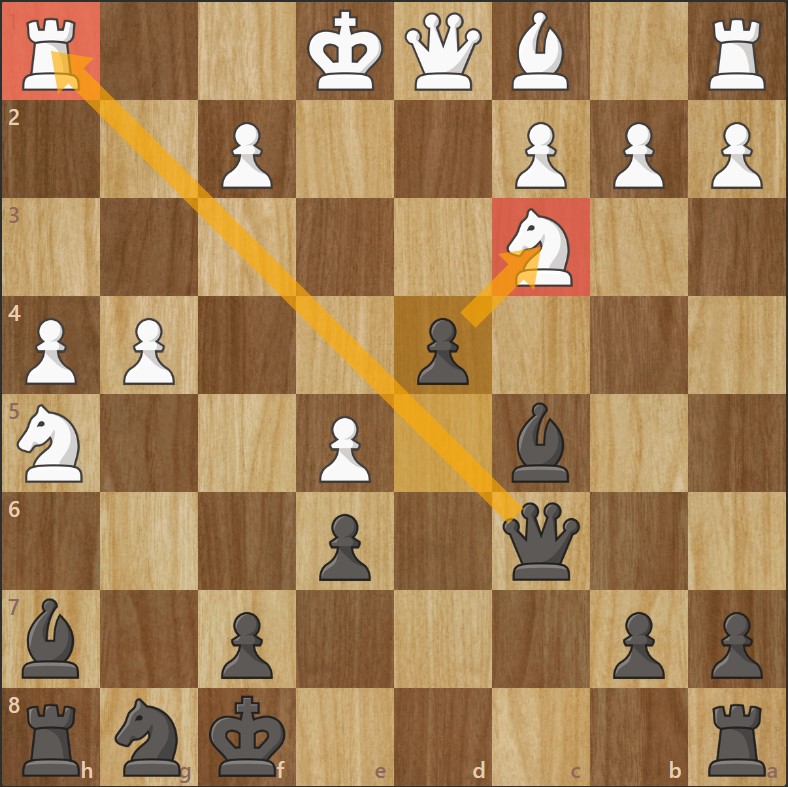
Then Black pushes d4, which attacks the knight with the pawn and simultaneously with the rook through a discovered attack.
The material gain for Black is unavoidable.
The Exchange Variation
White exchanges
1. e4 c6
2. d4 d5
3. Nc3
The main line of the Caro-Kann.
3…dxe4
Typical move, Blacks exchanges the center.
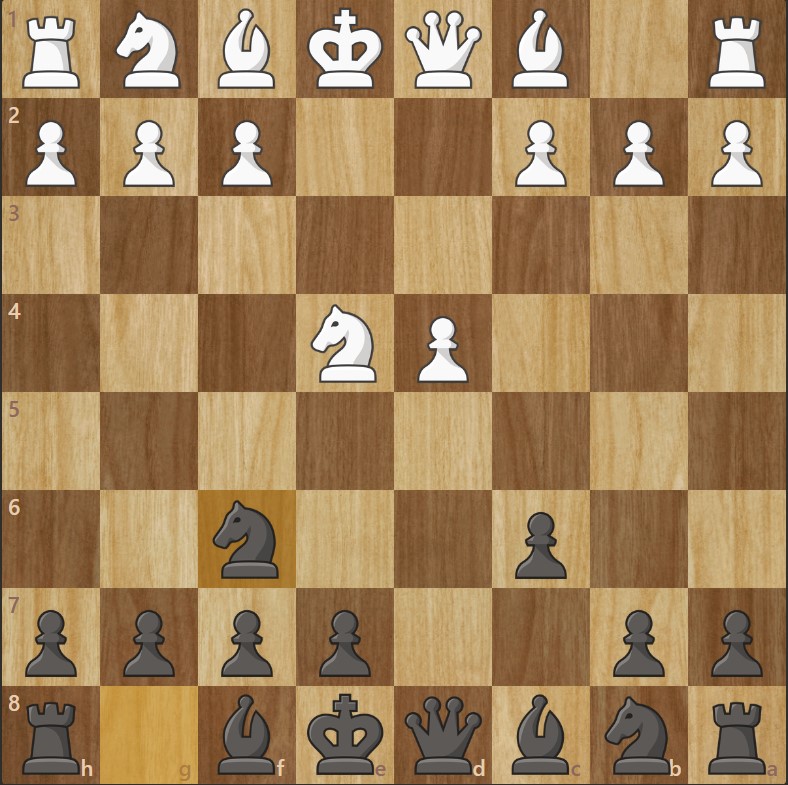
4. Nxe4 Nf6
Blacks chase knight.
5. Nxf6+ exf6 :
Black recaptures with the e-pawn, opening the file in front of the king.
A common blunder
6. Bc4 Qe7+
White develops their bishop actively, targeting f7 and the a2–g8 diagonal.
Black immediately replies with Qe7+, a precise move that forces White to defend their king.
7. Ne2 (MISTAKE)
The knight blocks the check, develops, and prepares kingside castling. At a beginner level, this move may seem like a good idea.
And yet…
The unprotected bishop
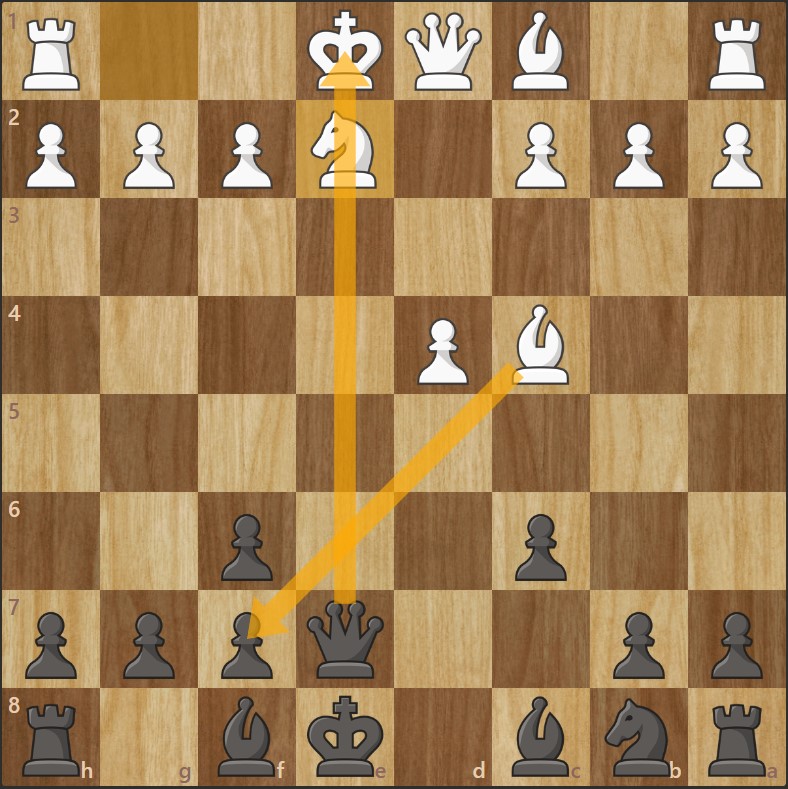
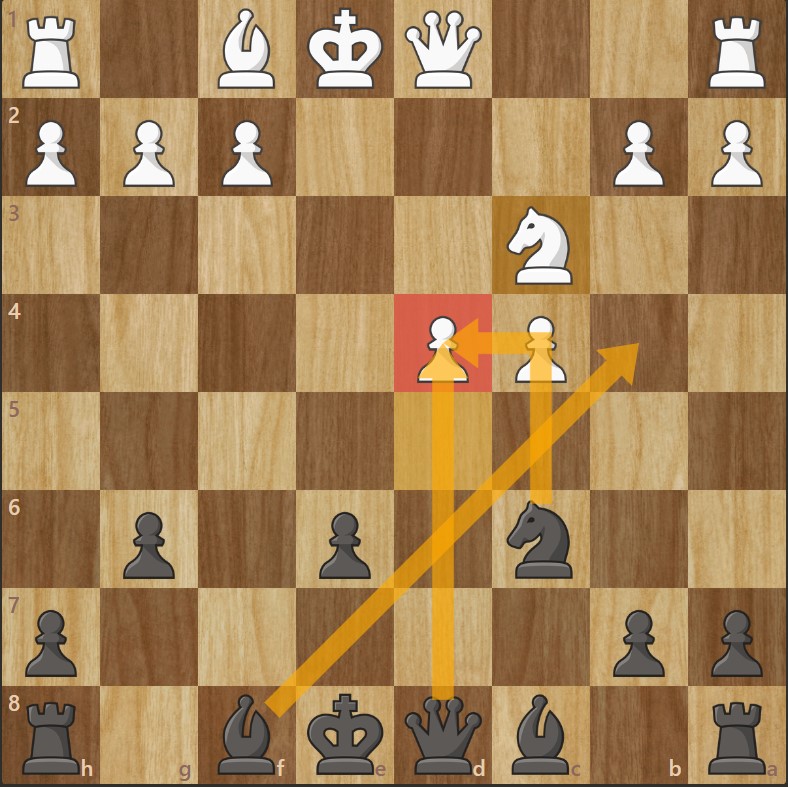
7… Qb4+
Check and an attack on the unprotected bishop.
No matter how White blocks the check, Black will win a bishop.
The fate of the position is sealed.
The Panov Variation
Challenging the center
1. e4 c6
2. d4 d5
3. exd5 cxd5
4. c4
White wants to break the symmetry and open up the position.
Idea: after …dxc4 or …Nf6 followed by cxd4, White ends up with an isolated pawn on d4.
This isolated pawn is a structural weakness but a dynamic strength → it provides open files and strong squares for the pieces.
The Four Knights
4. c4 Nf6
Natural development; Black attacks the d4 pawn.
5. Nc3 Nc6
White develops.
Black challenges the center with an active piece.
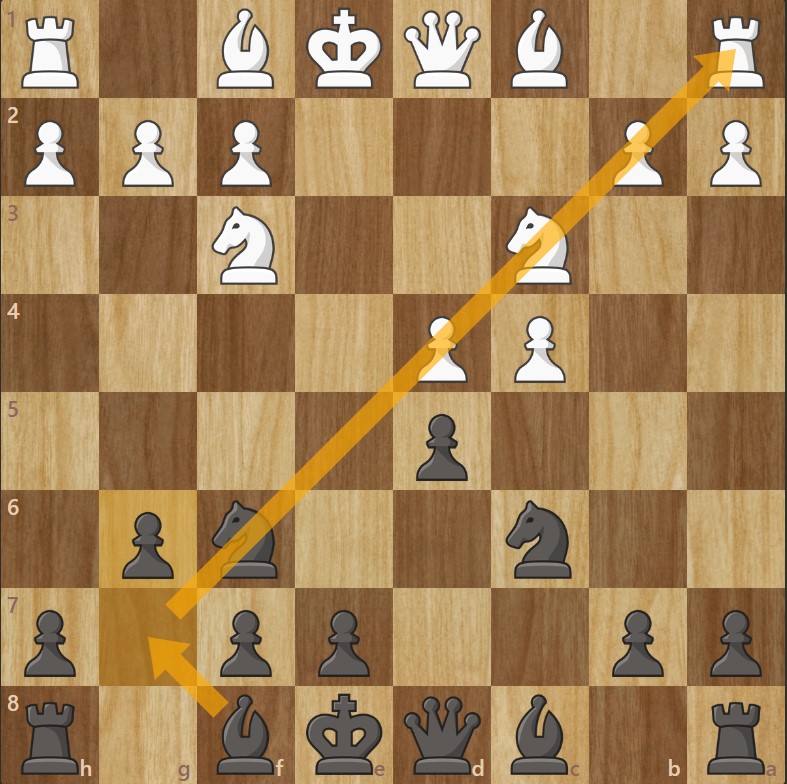
6. Nf3 g6
White continues their harmonious development.
Black chooses a flexible fianchetto setup: the bishop on g7 will exert strong pressure along the a1–h8 diagonal.
The bait on d5
7. Bg5
White develops the bishop, threatening the knight on f6.
Black also runs the risk of ending up with doubled pawns (often undesirable).
7… Ne4
The knight centralizes itself — it doesn’t attack anything undefended, but it removes one defender from the d5 pawn (the bait).
A knight down !
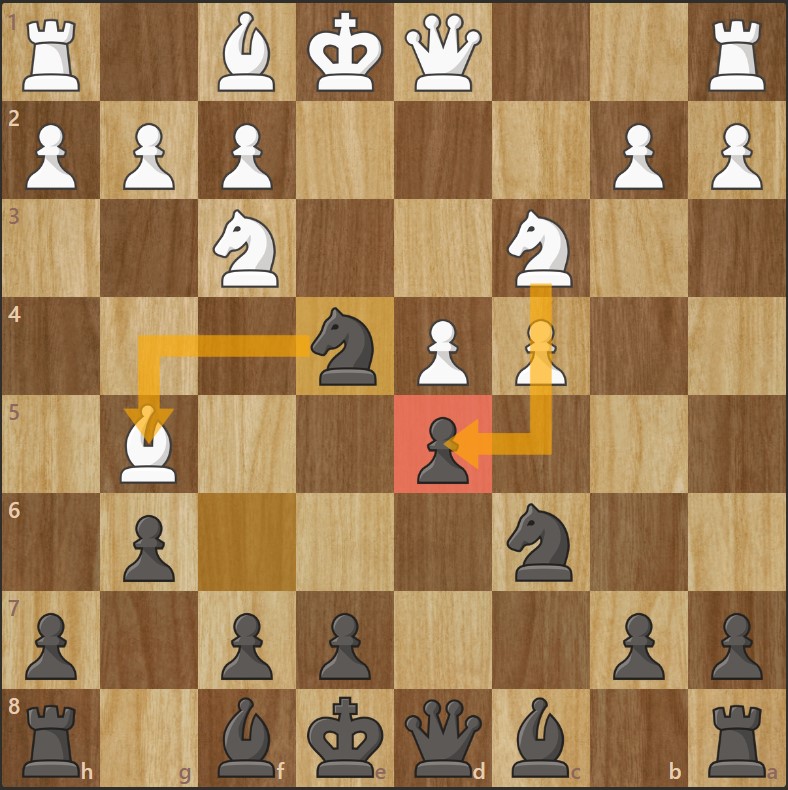
8. Nxd5
White takes the bait.
8… Nxg5
9. Nxg5
Exchange on g5: a bishop for a knight.
9… e6
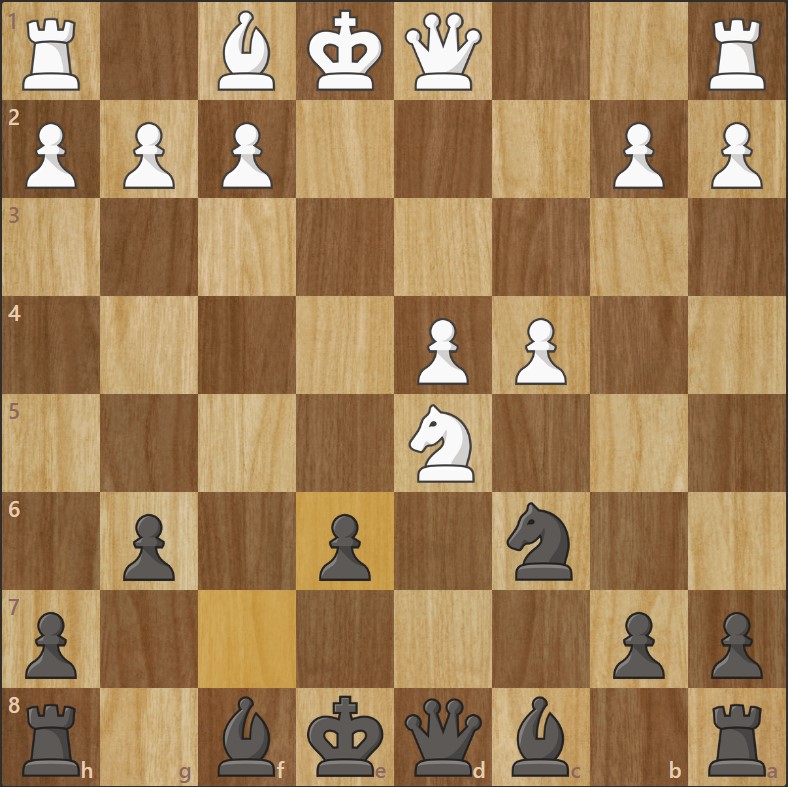
A double attack on the two white knights — one by the e6 pawn, and the other by a discovered attack from the queen.
White cannot prevent Black from gaining material.
The capture
10. Nxe6
The knight grabs a pawn before dying.
Everything will fall
The white knight retreats, and Black’s piece activity is so strong that threats start coming from everywhere.