Ultichess

Pieces movements

In this section, we will look at the different pieces that make up the game of chess, both in terms of their value and their movement.

The relative value in chess is a conventionally assigned number used to help evaluate a position.

Thus, if the pawn is given a value of 1, then : the knight is worth 3, the bishop is worth 3.5, the rook is worth 5, and the queen is worth 9.

Pieces

The Pawn

The Pawn

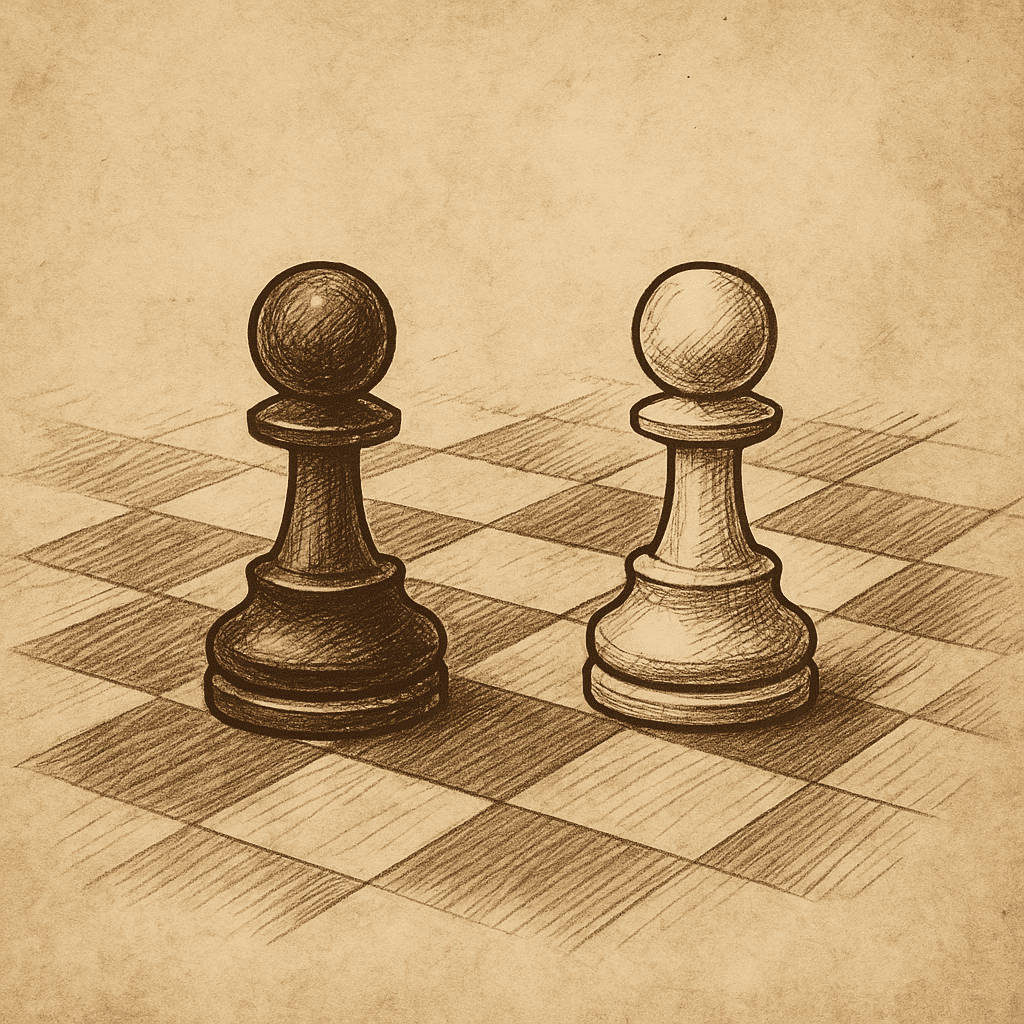
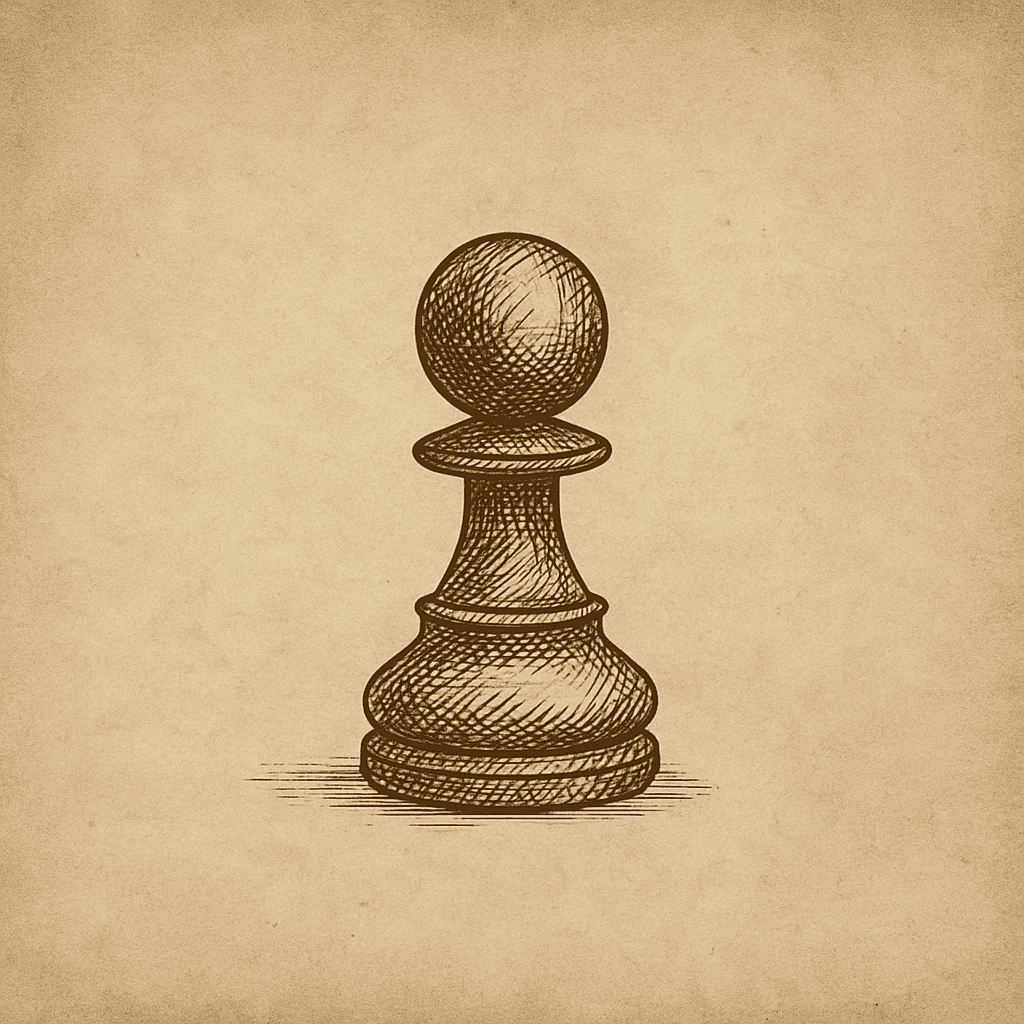
The pawn is a chess piece that moves one square forward, or two squares forward on its first move, and captures one square diagonally forward.

It is the least mobile piece in the game and, for this reason, the weakest. Yet chess players have held it in high regard since the 18th century, inspired by the famous quote from François-André Danican Philidor : “Pawns are the soul of chess.”

Despite its limited apparent strength, the importance of pawns is decisive, and even a single pawn advantage is often enough to tip the balance in one side’s favor.

  • Openings are classified according to the initial movement of a pawn, and some are directly defined by a pawn sacrifice (gambit).

  • In the middlegame, pawn structures shape players’ strategies, and mastering them is essential for improvement.

  • In the endgame, pawns often engage in a race to promotion, and the faster pawn frequently decides the game.

From its starting position, a pawn may advance one or two squares, at the player’s choice. The destination square must be empty, and if the pawn advances two squares, the square it passes over must also be empty.

After its first move, the pawn may advance only one square at a time, without changing files and only to an empty square. A pawn can never move backwards.

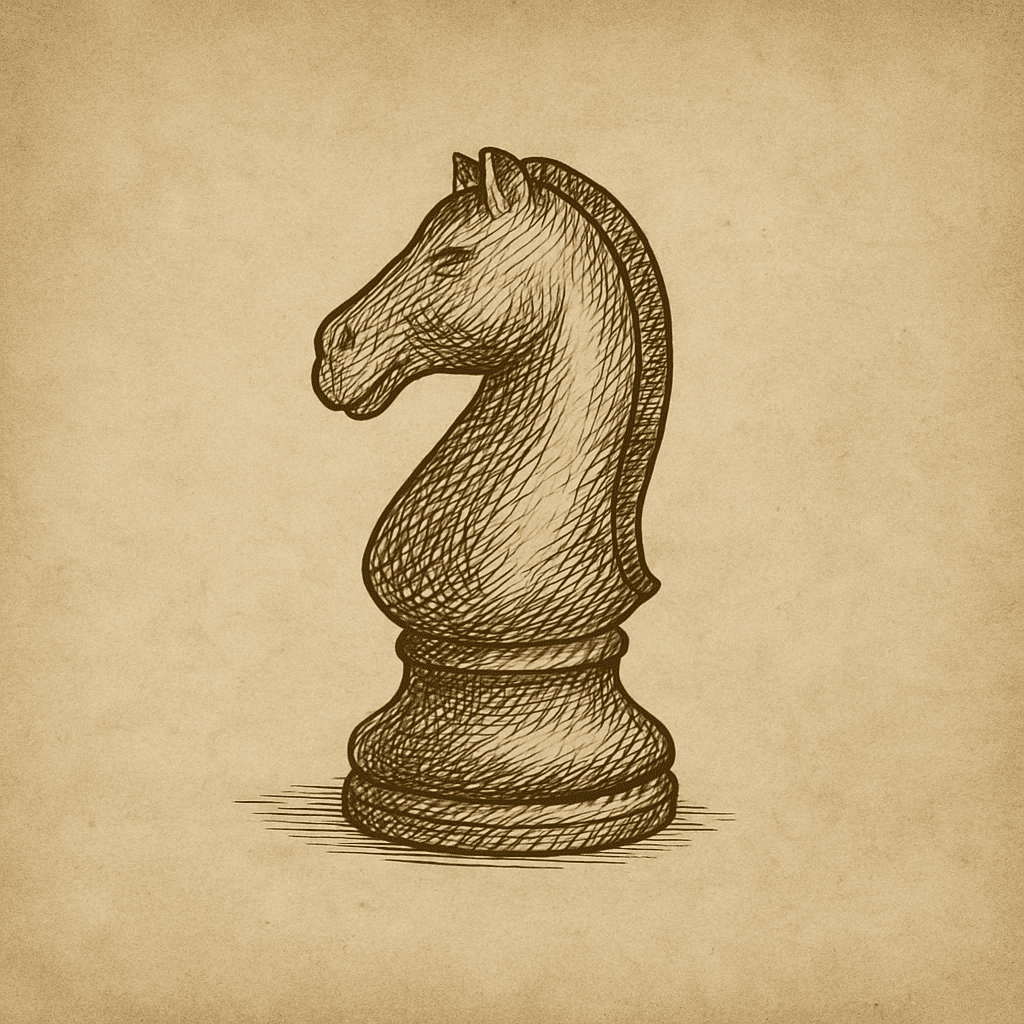
The Knight

The knight’s movement is unique, as it is the only piece that does not move “in a straight line” like bishops, rooks, and queens.

It moves in an “L-shape”: two squares along a rank or file, then one square perpendicular (“to the left” or “to the right”).

The knight is also the only piece that can jump over other pieces, making it extremely useful in closed or cramped positions. Thanks to this ability, the knight is well-known for creating forks, attacking two pieces at the same time.

Because of its movement pattern, the knight alternates between light and dark squares on each move.

The knight is considered a minor piece and is worth roughly the same as a bishop, though its effectiveness depends heavily on the structure of the position. As pieces are exchanged, the knight tends to lose power. It is often one of the first pieces to be developed—and also one of the first to be traded.

Its unique move often allows the knight to deliver powerful forks while remaining perfectly safe from immediate capture. For the same reasons, the knight is also capable of executing smothered checkmates.

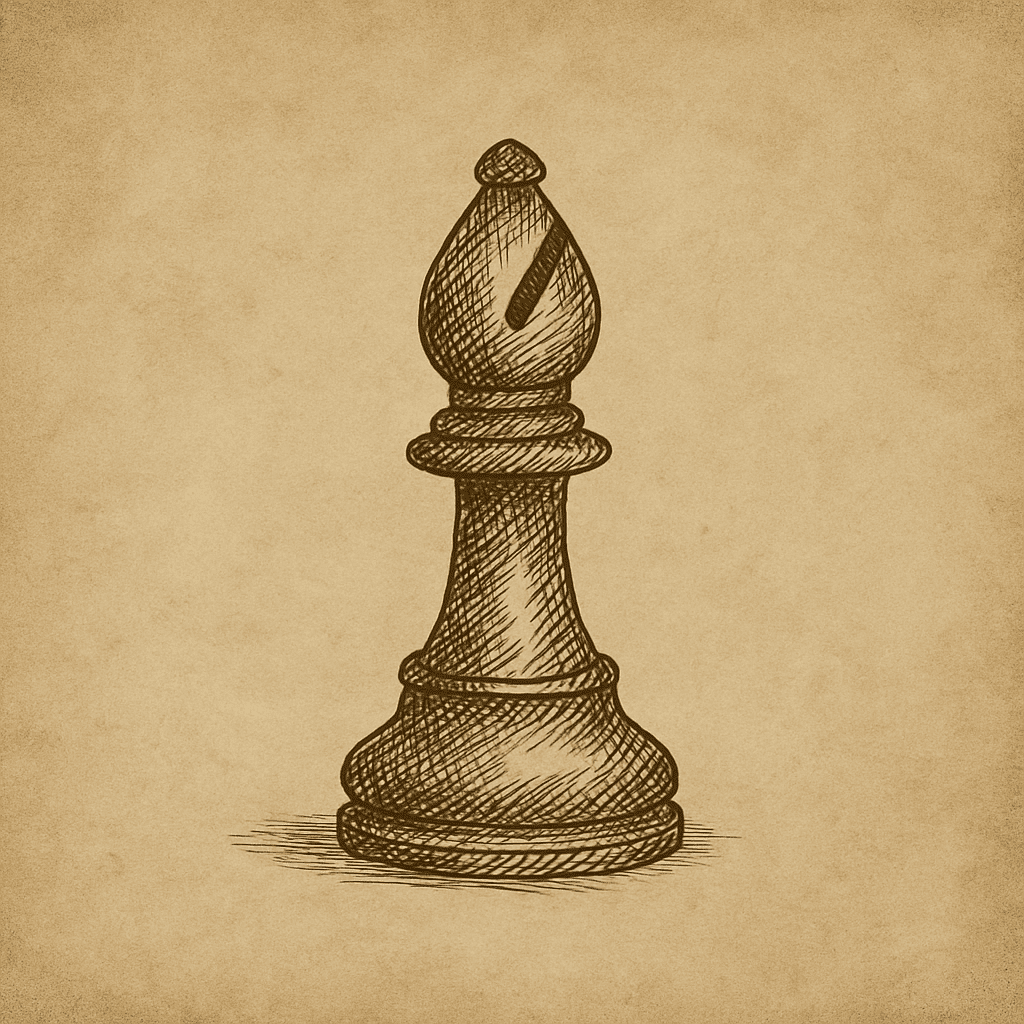
The Bishop

Each player begins with two bishops, placed on c1 and f1 for White, and c8 and f8 for Black. Bishops move diagonally.

A bishop is a long-range piece, meaning it can travel any number of squares along a diagonal, as long as it is not blocked by another piece—bishops cannot jump. Because they remain on the same color throughout the entire game, each bishop can only control half of the board.

Like the knight, the bishop is considered a minor piece. It is generally assigned the same value as the knight, though their relative strength can vary depending on the position.

As a long-range attacker, a bishop is often far more effective in open positions, where central pawns have been exchanged and the diagonals are unobstructed.

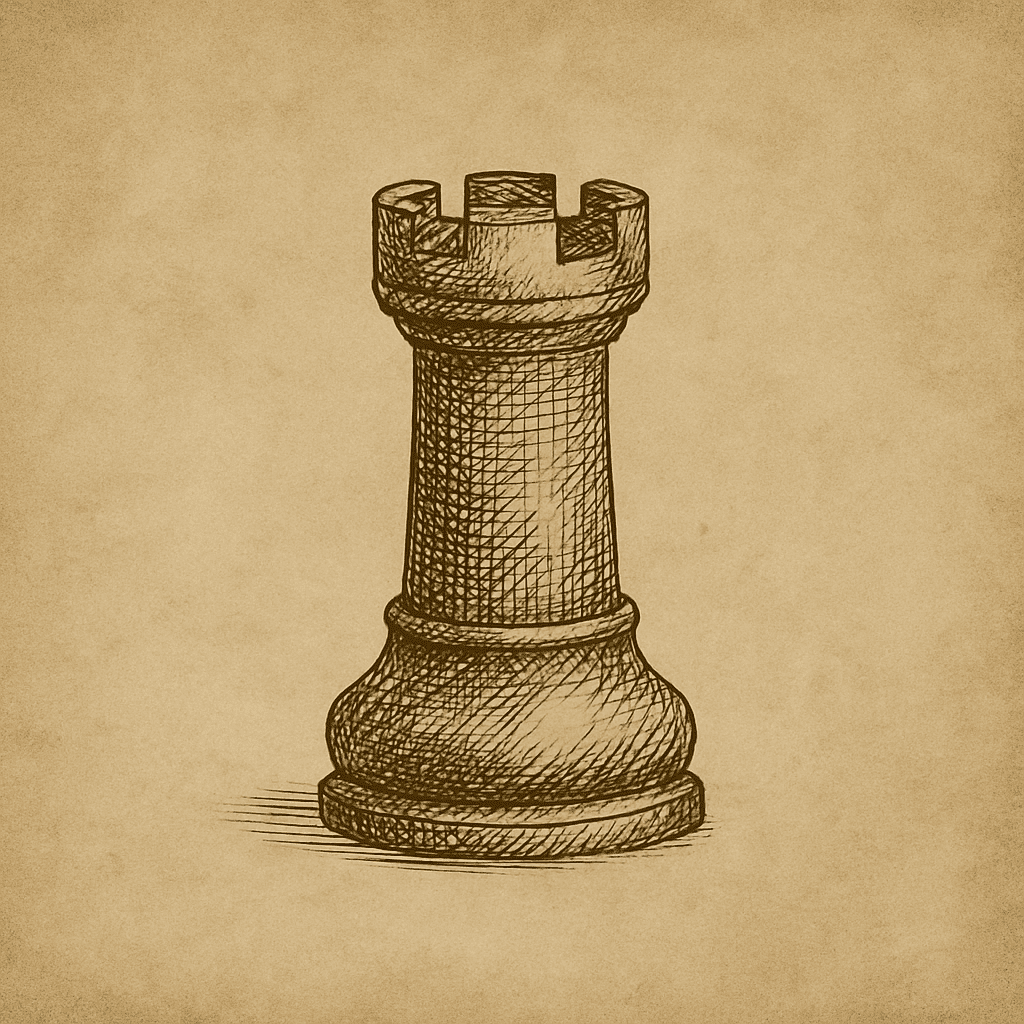
The rook

The rook moves horizontally or vertically. It is a long-range piece, meaning it can travel any number of squares along a rank or file, as long as it is not blocked by another piece—rooks cannot jump.

Unlike the bishop, a rook’s range of action does not depend on its position on the board.

In fact, a rook placed on a1, d8, or e4 will always control the same number of squares: 14.

Because of this, centralizing a rook does not affect its efficiency in the same way it does for other pieces.

Each side begins with two rooks, positioned on a1 and h1 for White and a8 and h8 for Black.

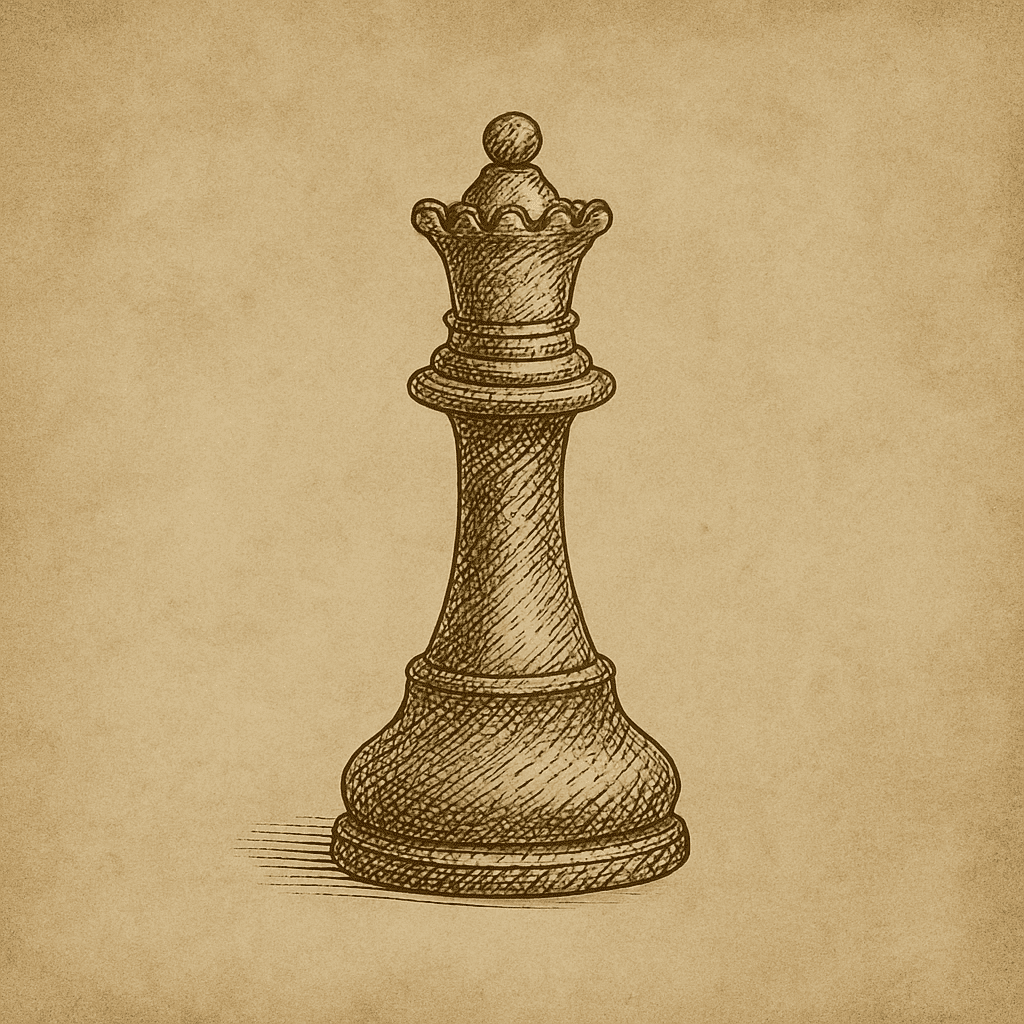
The Queen

The queen is the most powerful piece in the game, and each player has one.

At the start of the game, she is placed next to the king. The white queen starts on the central light square, and the black queen on the central dark square. In algebraic notation, the white queen begins on d1, while the black queen begins on d8.

The queen is a long-range piece capable of moving vertically, horizontally, or diagonally—any number of unoccupied squares—effectively combining the movement of both the rook and the bishop.

Like all other chess pieces (except for the pawn when capturing en passant), the queen captures by moving to the square occupied by an opposing piece.

The King

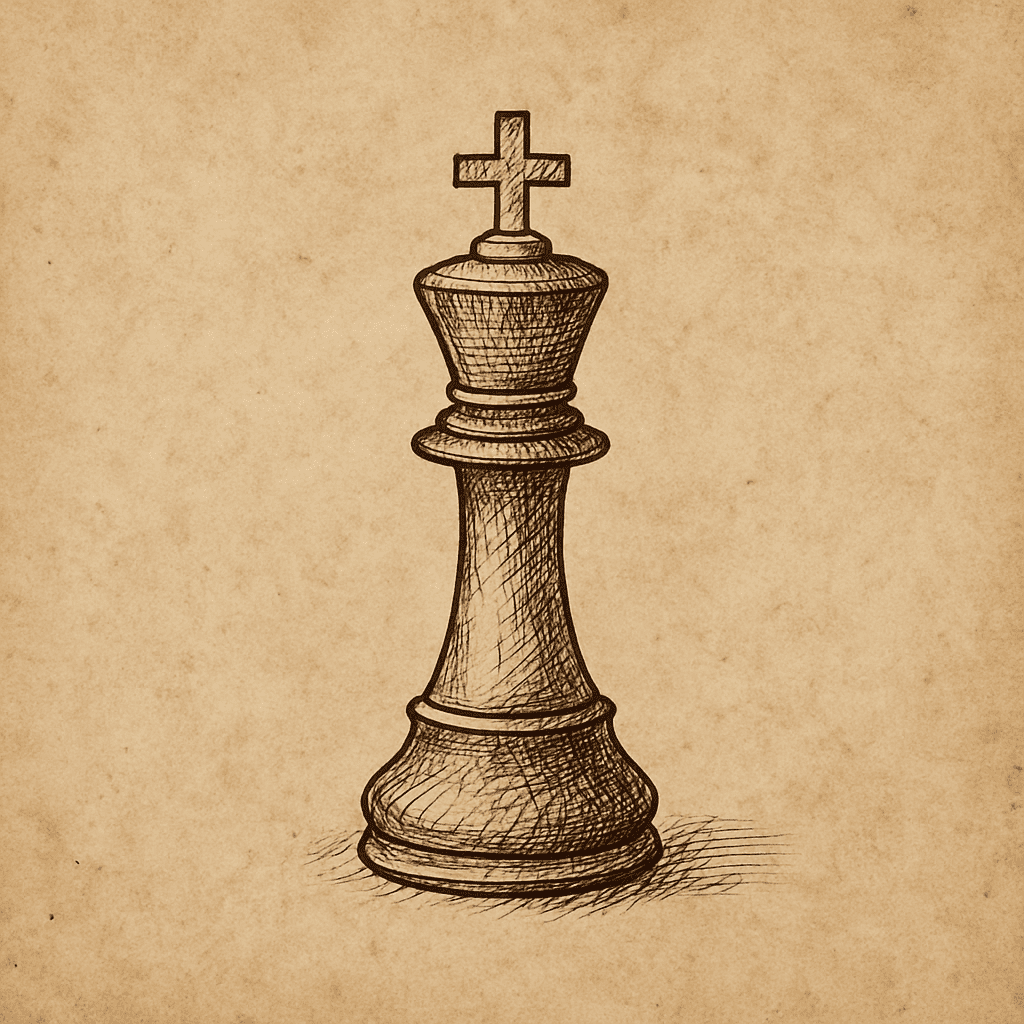
The king is the most essential piece in chess, moving one square in any direction. If a player’s king is threatened with unavoidable capture on the next move, the situation is called checkmate, and that player loses the game.

In a standard chess game, the white king starts on the right-central square of the first rank (with the queen on its left and the bishop on its right), and the black king begins directly opposite on the same file. In algebraic notation, the white king starts on e1, and the black king on e8.

The king moves one square in any direction—horizontally, vertically, or diagonally—except onto a square occupied by one of its own pieces or a square controlled by an enemy piece. A king cannot move into check, and therefore the two kings can never occupy adjacent squares or diagonally touching corners.

The king captures the same way it moves: it may take any unprotected enemy piece by moving onto its square, after which the captured piece is removed from the board.

Special moves

Kingside Castling / Queenside Castling
Kingside Castling / Queenside Castling

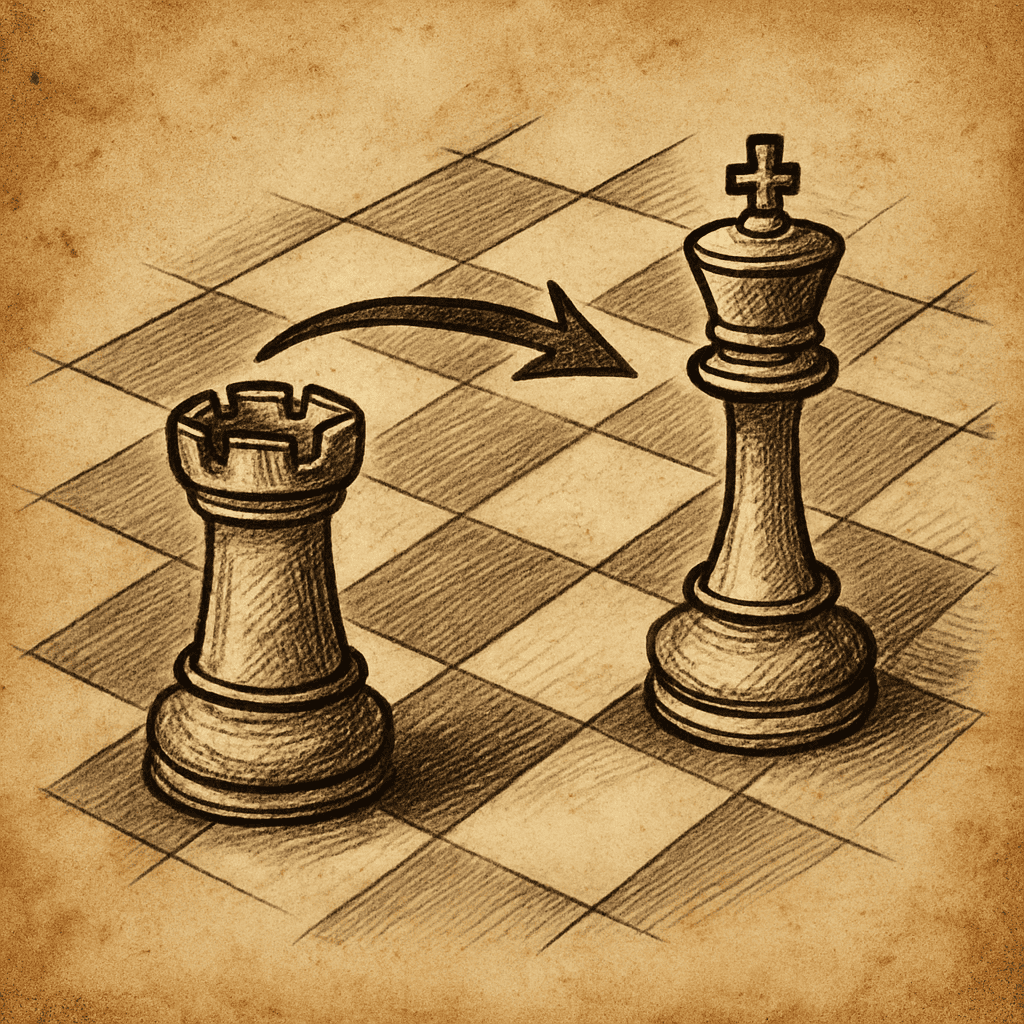
Castling is the only move in chess where a player may move two of their own pieces at the same time (the king and a rook), and it follows a special movement pattern: the king moves two squares along its rank toward the rook, and the rook then jumps over the king to land on the square next to him, on the opposite side.
This combined move is only allowed if all of the following conditions are met:

  • The king and the rook involved have never moved.

  • There are no pieces between the king and the rook.

  • The king is not in check at the moment of castling.

  • None of the squares the king crosses—or the square it lands on—may be under attack by an opposing piece (the king may not move through or into check).

There are two types of castling:

  • Kingside castling (the king ends on the g-file and the rook on the f-file)

  • Queenside castling (the king ends on the c-file and the rook on the d-file)

En Passant Capture

The pawn’s ability to advance two squares on its first move allows it to avoid the confrontation that would have occurred if it had moved only one square.

To counterbalance this advantage—one that would otherwise penalize an opposing pawn that had bravely advanced—the opposing pawn is allowed to capture as if the first pawn had moved only one square.

This en passant capture can only be made immediately after the double-step move. It is the only situation in chess where a piece is captured without the capturing piece landing on the square it occupies.